Note: This post may contain affiliate links. If you purchase through them, we may earn a small commission at no extra cost to you.
When we hear the phrase “Nothing in Life Is Free,” it can sound like a power play. But in a trauma-aware, relationship-first approach, it’s not about control. It’s about creating safety through structure and helping your dog feel secure in a world that finally makes sense.
Nothing in Life Is Free has gotten a bad rap in some circles. Some trainers use it to justify rigid control, withholding affection, or forcing a dog to “submit.” That’s not what we’re doing here.
In The Rosetta Approach, Nothing in Life Is Free isn’t a punishment. It’s a stabilizer. It’s a calm, clear system that says:
“You don’t have to guess anymore. I’ve got you.”
They do not want chaos. They want to know how the world works.
When you teach your dog that eye contact opens the door, or that a sit earns the food bowl, you are not being cold. You are giving them a clear map. And that map helps calm the nervous system, especially in dogs who have been neglected, bounced around, or overwhelmed.
Ritual replaces reactivity
Structure creates security
Predictability allows for peace
It is not “nothing is free” because your dog must earn love.
It is “nothing is random.” And that is healing.
A trauma-informed training approach like this is explored in Trauma Informed Dog Training by Sally Gutteridge. Her work highlights how structure, repetition, and calm leadership can help dogs heal from fear and uncertainty.
Imagine a toddler with no bedtime, no meal routine, and no one to say “no” to screen time. That is not freedom. That is stress.
Dogs feel it too. When we give them boundaries with kindness and consistency, we are saying:
“You belong here. And in this home, there is rhythm.”
That rhythm could look like:
Waiting calmly at the door before going out
Sitting before meals
Coming when called, even if just across the room
Walking together at a shared pace
These are not commands. They are connection points.
Moments where your dog looks to you and you respond with clarity, not confusion.
Some dogs melt under pressure. Others push back when they feel unsafe. Nothing in Life Is Free, when used with heart, helps both dogs and humans slow down. It builds the habit of checking in.
You are not bribing with treats. You are not overpowering with tone. You are building a shared language. One calm moment at a time.
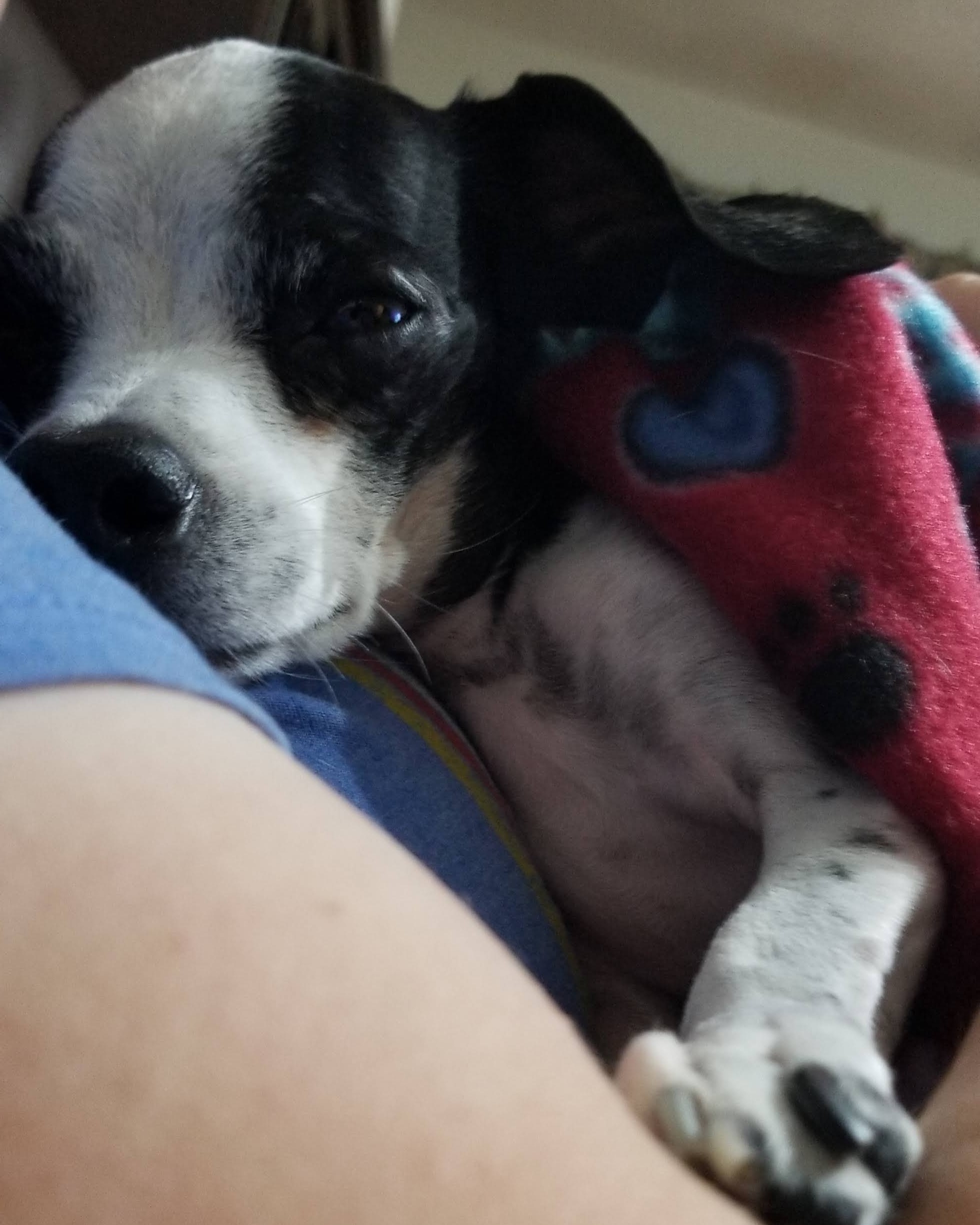
Sammy was skeletal when we got him. Curved back. Scared of everything. Wrapped in a blanket 90 percent of the time.
He could not handle training sessions. But he could handle structure.
He got his food at the same time, in the same spot, after making eye contact
He got lifted into bed the same way, every night, with the same phrase
He learned that I would wait for his cue before helping him up, and that I always would
Nothing in Life Is Free did not teach him obedience.
It taught him that he could trust me. That he was part of the rhythm.
Dogs do not need to earn love. But they do need to understand how to move through the world. Nothing in Life Is Free, done with compassion, gives them that map.
So the next time someone tells you that Nothing in Life Is Free is too strict, tell them this:
“In my house, nothing is random. That is what keeps us all safe.”
Sammy did not come to me paralyzed. That came later, out of nowhere, with no clear cause. What he did come with was fear, frailty, and years of unpredictability. He was emaciated, anxious, and unsure of everything… except me.
I could not train him the usual way. But I gave him rhythm.
Eye contact before meals.
The same routine each night.
The same phrase before rest.
And over time, those small patterns became his safety net.
So when the day came that his legs stopped working, he did not panic. He let me lift him. Move him. Advocate for him. Because we had already built the structure. He already knew I had control.
That is what leadership looks like.
That is what Nothing in Life Is Free really means in this house.
“I have got you. You do not have to guess.”