
Note: This post may contain affiliate links. If you purchase through them, we may earn a small commission at no extra cost to you.
You don’t need to be stoic, fearless, or Zen to lead a dog well. You just need to be grounded enough to make them feel safe.
That’s the Rosetta Approach: not perfect calm, but predictable presence.
If you’re anxious, sensitive, or neurodivergent, welcome. You’re not broken. You’re not disqualified from being a dog’s steady anchor. You just need tools that respect both your nervous system and theirs.
ou don’t have to be calm all the time. Just in the moments that matter.
That starts with:
Pausing before giving a cue
Softening your shoulders before you reach for the leash
Letting your exhale land before calling them to you
Choosing clarity over speed
Those micro-moments are what your dog feels.
Not your diagnosis. Not your panic. Not your bad day.
Just your breath, your body, and your tone, one second at a time.
You don’t have to be calm all the time. You just have to practice calm in the moments that matter.
That starts with:
Pausing before giving a cue
Softening your shoulders before you reach for the leash
Letting your exhale land before calling them to you
Choosing clarity over speed
Those micro-moments are what your dog feels.
Not your diagnosis. Not your panic. Not your bad day.
Just your breath, your body, and your tone one second at a time.
Anxious brains crave patterns. So do dogs. When you both live inside a predictable rhythm, your nervous systems stop guessing.
Try these:
Same walk route every morning
Same cue before mealtime
Same place for training games
Same phrase before bed or crate time
Consistency makes leadership feel safe. You’re not faking confidence. You’re creating calm you can count on.
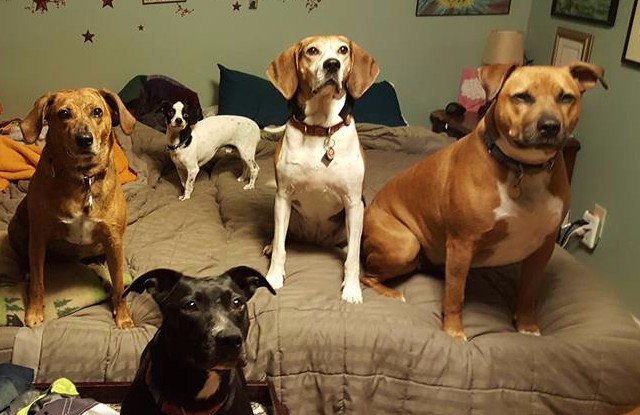
There were five dogs in that bed. All rescues. All with baggage.
Lady had anxiety and storm phobia.
Cleopatra was nervous around strangers.
Patience (who had neither patience nor manners) was brilliant but always trying to escape.
Sammy arrived emaciated, shut down, unsure. By this photo, he was finally at a healthy weight.
Beauregard was terrified of little dogs.
And me?
I’m not consistent. I forget routines. I don’t always breathe before reacting.
Except with them.
With my dogs, I become calm. Predictable. Grounded.
I hold the line, speak the cues, and build the kind of rhythm nervous systems can trust.
That photo isn’t a fluke.
It’s what happens when love takes form, and structure creates safety.
If you’re an anxious dog owner, you’re not alone. And you’re not doing it wrong. You don’t have to hide your stress or pretend to be calm all the time. What matters most is that your dog sees you trying.
Dogs don’t need perfection. They need presence.
When you show up with steady routines, gentle cues, and a willingness to co-regulate, your anxiety doesn’t get in the way. It becomes part of the trust you build together.
Leadership doesn’t mean suppressing your emotions. It means choosing which part of you leads the moment.
It means:
Soothing your fear before reaching for the leash
Holding structure even when you’re tired
Giving direction without giving in to chaos
Offering a “we’ve got this” energy, even when you’re not 100 percent sure
Because here’s the truth: you do have this.
And your dog doesn’t need perfect. They need you, steady, soft, and still trying.
If you’re looking for more support on regulating yourself while leading your dog well, Grisha Stewart’s Stellar Village is a thoughtful, trauma-aware resource built for both ends of the leash.