Note: This post may contain affiliate links. If you purchase through them, we may earn a small commission at no extra cost to you.
When a dog shifts suddenly from soft to shut down, from silly to snarling, it’s easy to focus on the behavior. But behavior is not the root. It’s a reaction. A language. And sometimes, it’s a cry for safety.
That idea is at the core of Jelly Bean dog training, a trauma-aware approach that sees behavior as protection, not defiance.
Years ago, I came across a book by C.W. Meisterfeld called Jelly Bean vs. Dr. Jekyll & Mr. Hyde. The core idea stayed with me: inside every dog is a soft, connected self, a Jelly Bean. And when that self doesn’t feel safe, something else steps in to protect it. That’s when we see what looks like defiance, stubbornness, or aggression. But what we’re really seeing is survival.
I’ve worked with a lot of dogs. Seniors with dementia. Rescues with trauma. Puppies still figuring out the world. And this metaphor? It’s never failed me.
Because when I shift my mindset from “fixing behavior” to “protecting the Jelly Bean” everything changes.
It’s the warning sign.
Dogs don’t wake up wanting to misbehave. When they lunge, shut down, or “act out,” they’re communicating the only way they know how. And when we punish the communication without addressing the cause, we teach them to go quiet rather than to feel safe.
This doesn’t mean we let chaos rule the house. It means we lead with clarity, calm, and consistency. That’s what gives the Jelly Bean a reason to come back.
Not dominance. Not bribery. Just steady ground.
When I talk about leadership, I mean the kind of presence that says,
“I’ve got you. You can rest now.”
This is where the Rosetta Approach was born, from the idea that training is translation. And that good leaders don’t overpower. They interpret. They hold space. They read the room before giving commands.
Structure becomes a way to say you’re safe.
Boundaries become a way to say you can trust me.
Because this isn’t just about dogs.
There are parts of myself, especially during grief , that I’ve only learned to recognize through working with dogs. Parts that shut down. Parts that flinch. Parts that snarl when I’m too overwhelmed to cry.
What helped me wasn’t being told to “snap out of it.”
It was being given room to process, pause, and slowly return to the soft version of myself.
Dogs need the same.
It’s not a technique. It’s a lens. A way of seeing the soft self beneath the survival patterns. Jelly Bean dog training isn’t about obedience. It’s about protecting the part of your dog that wants to connect and building a world where they feel safe enough to try.
It’s to create a life where the Jelly Bean doesn’t need to hide.
This work is slow. Quiet. Repetitive. And deeply worth it. You’ll see it in a softening body. In eye contact held longer than it was last week. In a moment where your dog doesn’t flinch when you reach for the leash.
This is the heart of Jelly Bean dog training: creating a life where the soft part of your dog no longer has to hide.
That’s progress.
That’s healing.
That’s the Jelly Bean, coming home.
Want Help figuring out what your dog is trying to tell you? Download The Rosetta Starter Pack or reach out. Let’s protect the soft parts, together.
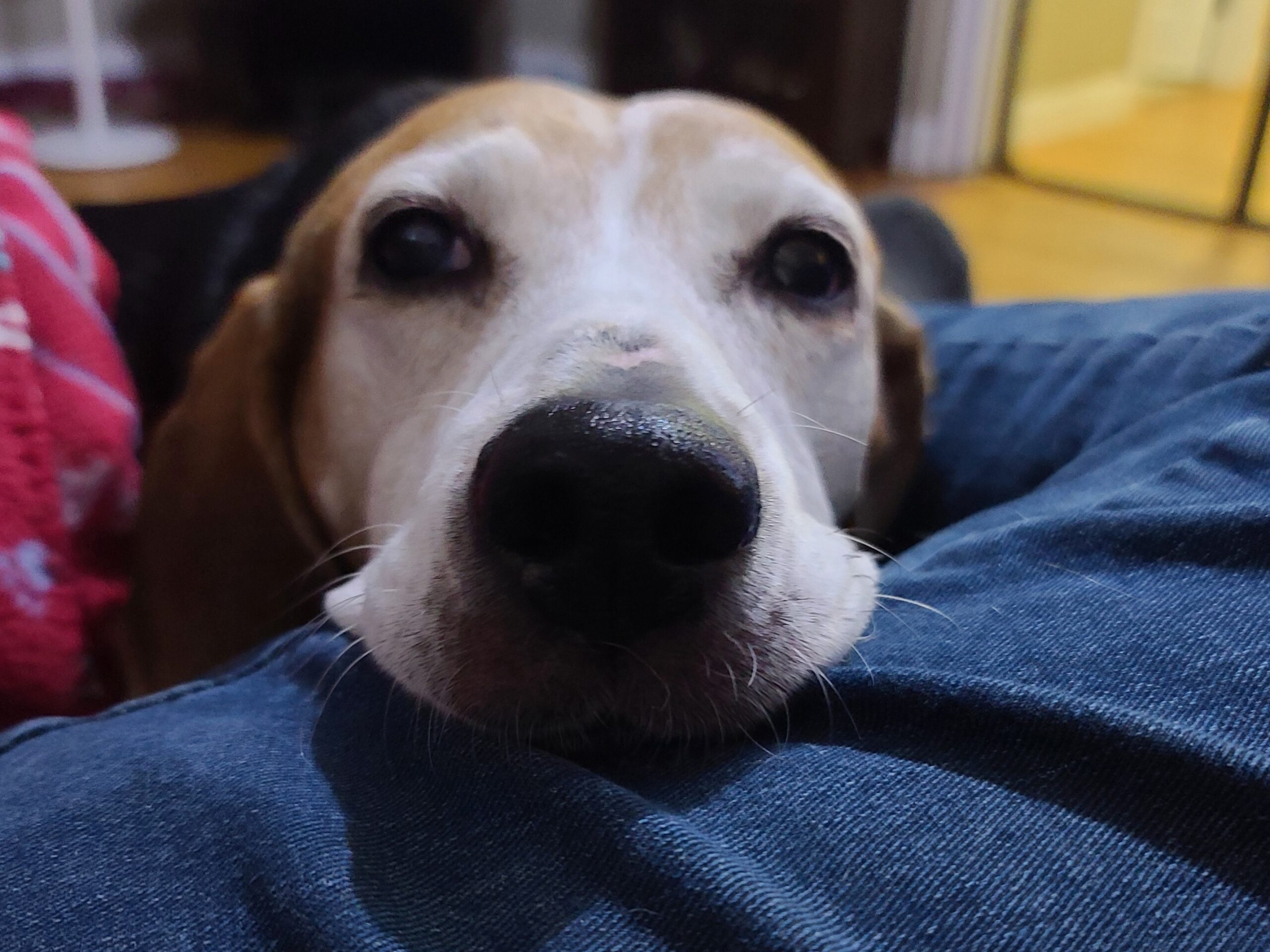
The dog in the photo is Lady. When she came to us, she brought fear. She nipped my partner. She hid. She trembled. And she only trusted me. I became her safety, her blanket, and her translator.
Her reactions weren’t aggression though, they were survival. What she needed wasn’t correction. She needed time. Structure. Emotional consistency. And slowly, through quiet, steady care, her soft side, her Jelly Bean, began to return.
This work isn’t hypothetical. It’s lived. And it’s worth every step.
The Rosetta Approach was built for dogs like Lady and the people willing to listen to what behavior is really saying.