
Note: This post may contain affiliate links. If you purchase through them, we may earn a small commission at no extra cost to you.
Rest for healing pets is often misunderstood. In a world obsessed with doing, rest can look like failure. But for pets and people, rest is where real healing begins. Whether your animal is recovering from surgery, navigating chronic pain, or processing trauma, rest is not a delay. It is the condition that allows true recovery to happen.
Whether your animal is recovering from surgery, struggling with chronic pain, or moving through trauma, pushing too hard can backfire. Healing is not linear. It spirals. And rest is not the absence of progress. It is the environment that makes progress possible.
We’ve been conditioned to measure healing by action:
Did they eat more? Walk farther? Play longer?
But often, what matters most is what happens in between:
Deep sleep
Calm, quiet hours without stimulation
Choosing not to react to a trigger
Letting the body soften instead of brace
These aren’t signs of stagnation. They are signs that the nervous system is recovering.
We love progress. It is easy to celebrate a dog’s first walk after an injury. But it is just as easy to accidentally overdo it, especially when you’re trying to be proactive.
What that can look like:
Over-exercising a sore joint
Pushing training when the dog’s energy is low
Reintroducing visitors too soon
Starting a new food, supplement, and modality all in the same week
More effort does not mean faster results.
Sometimes healing speeds up the moment we stop doing and start listening.
Rest isn’t passive. It is a practice. Here’s how to make it part of your pet’s day:
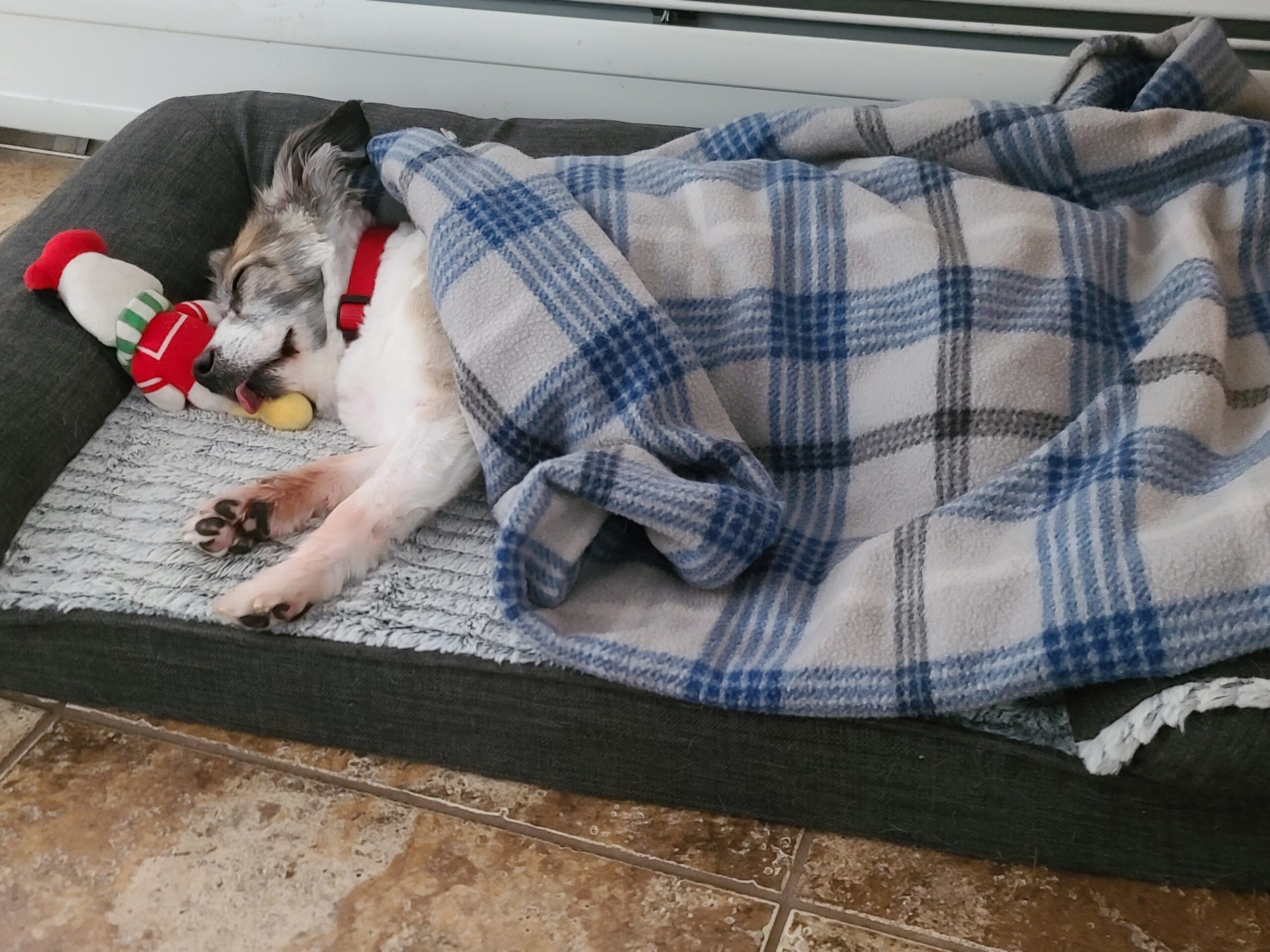
Offer an “off-duty” space. A bed, crate, or corner that signals nothing is expected of them.
Limit stimulation. Reduce loud environments, unfamiliar visitors, or unpredictable schedules.
Honor down days. If your pet is more withdrawn, don’t push. Let rest be the day’s job.
Watch for small cues. A yawn, an averted gaze, or a slow turn away can all mean they need a break.
And if you’re the caregiver? Rest applies to you too.
Looking for calming tools? This pet-safe calming bed offers soft, secure rest to support recovery and is one of the most sought-after beds among the rescue dogs in our care.
When your pet is struggling, it is easy to forget your own limits. You stay up late researching. You hold your breath during every episode. You give more than you have.
But your nervous system matters too.
Your calm becomes their calm.
Your rest gives them permission to stop trying so hard.
Even ten minutes with your phone down and your hand on their fur can be medicine for both of you.
Feeling worn thin? Visit Reducing Caregiver Overwhelm (Without Guilt) for practical ways to rest without stepping away from what matters.
Rest is not optional. It is the foundation.
Without it, food isn’t digested well. Remedies don’t settle. Muscles stay braced. The nervous system stays in survival mode.
But with it?
Healing becomes less like a task and more like a homecoming.
Soft. Gradual. Real.