

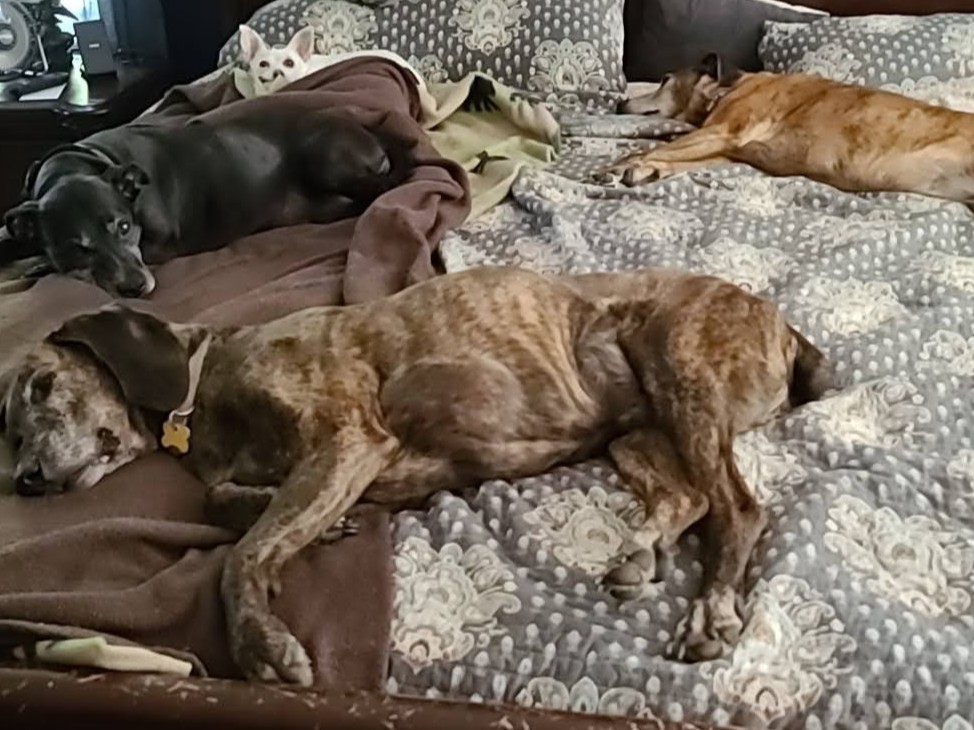
Every pet needs a space that feels like safety. Not a timeout corner. Not a crate that only gets used during chaos. A true calm zone. One that tells the nervous system, “You’re okay here.”
These spaces don’t have to be big, but they do have to be intentional. Because pets read energy, not square footage.
A calm zone is a soft landing. It’s predictable. It’s yours and theirs. And it’s not just for when things go wrong.
It’s not:
The crate that only comes out during fireworks
The spare room that no one visits
The couch, if it’s in the middle of nonstop chaos
Instead, think of a calm zone as a reset point. A place your pet can go to regulate, not hide.
These zones aren’t about expensive gear. They’re about creating layered signals of safety. That might look like:
A bed or mat with familiar smells
White noise or gentle music nearby
Low lighting or a shaded area
One or two familiar toys — no clutter
Calming scents like lavender or chamomile (used safely and sparingly)
Your presence, quietly nearby, not performing or managing
And most importantly, a consistent energy. This isn’t the spot where you check email and sigh loudly. This is the “we’re both okay” spot.
Don’t wait for meltdowns to introduce the calm zone. Build it into the day:
Start and end the day there
Sit there with your coffee
Offer chews or quiet time in that space
Let your energy settle before inviting your pet in
The goal is simple: “This is where we reset. This is where we soften.”
Calm zones aren’t just for your pet. Sometimes we all need a designated place to breathe, sit down, and stop bracing for the next alert or accident.
Let this be a shared space, even if just for five minutes. Healing works best when it includes everyone in the home.